Leading a scaleup today means reinventing yourself every quarter
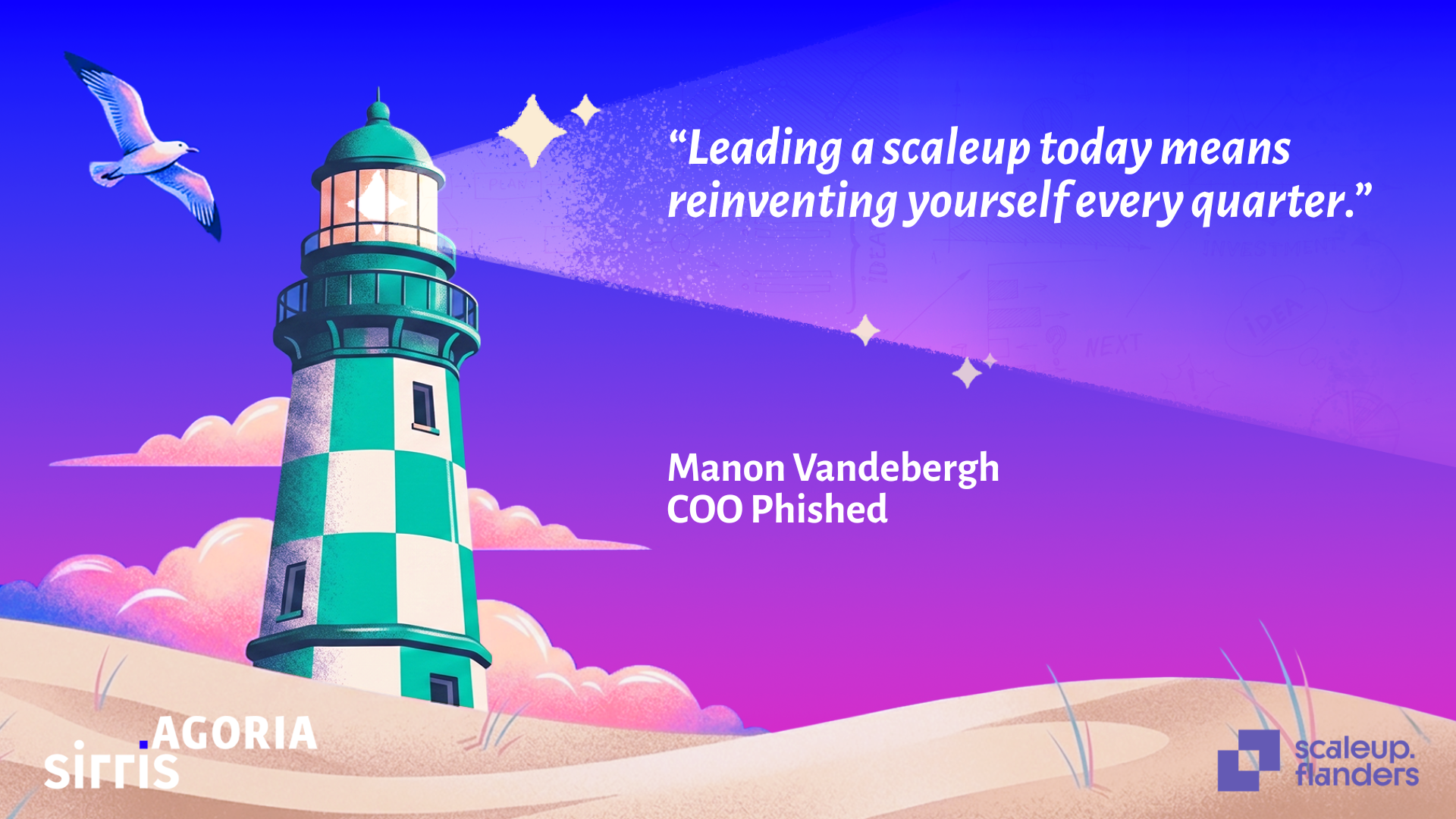
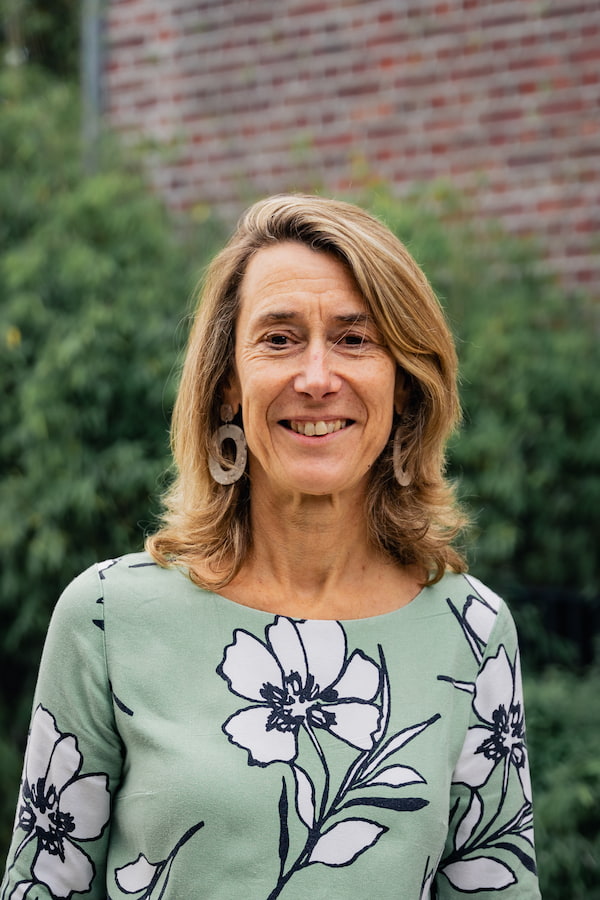
"A few years ago, cybercriminals needed time to craft convincing phishing emails. Today, AI allows them to generate highly personalised attacks at massive scale. That has fundamentally changed our industry."
Leading a scaleup today means reinventing yourself every quarter
While many companies are still experimenting with AI, Leuven-based cybersecurity scale-up Phished is taking a much more ambitious approach. Rather than simply adding AI to existing processes, the company is gradually transforming itself into an AI-native organisation. According to COO Manon Vandebergh, that's a far bigger challenge than adopting new technology.
Everyone is talking about AI. What has changed most over the pasttwo years?
Manon Vandebergh: "The pace of change. At Phished, we see it happening from the front row. A few years ago, cybercriminals needed time to craft convincing phishing emails. Today, AI allows them to generate highly personalised attacks at massive scale. That has fundamentally changed our industry."
"For years, we trained employees to spot phishing emails by looking for spelling mistakes or awkward wording. That no longer works. AI has made phishing attacks far more convincing, more personal and much harder to recognise. As a result, we have to evolve our own product much faster than before."
So your AI transformation goes well beyond the product itself?
"Absolutely. I think many companies are still asking how they can add AI to their existing business. We're asking a different question: if we were starting Phished from scratch today, what would the company look like?"
"Building a brand-new AI-native startup is relatively straightforward. Transforming an established scale-up with customers, mature products and existing processes into an AI-native organisation is a completely different challenge."
"That's why we deliberately work at two different speeds. Everything new is built AI-native from day one, while our existing products and processes are transformed step by step."
What does that mean for your employees?
"It means everyone suddenly has to learn new skills, including the leadership team. The reality is that very few people know what an AI-native organisation will look like five years from now. We're all experimenting. We're all learning."
"What matters most is your mindset. Instead of focusing on what AI still can't do, ask yourself what has suddenly become possible. That perspective changes everything."
AI is also becoming a core part of software development. Has that transition been smooth?
"Not at all. AI sometimes generates code that even experienced developers wouldn't naturally have written themselves. At first, that feels uncomfortable because you've been trained to understand every single line of code your produce."
"Sometimes AI suggests a solution that works perfectly, even though it's completely different from how you would have approached the problem. That requires a new way of working. You shouldn't trust AI blindly, but you also shouldn't reject it out of fear. We try to approach it as rationally as possible."
How do you do that?
"By measuring everything. We compare AI-generated code with manually written code. We track bug rates, productivity gains and the quality of the final product."
"That's essential. Companies shouldn't fall into the trap of either hype or fear. In the end, the data should guide your decisions."
Many founders wonder whether AI will reduce employment. What'syour view?
"I think jobs will change far more than they'll disappear."
"Take copywriting as an example. A while ago we had two copywriters. Today we have one. Not because content has become less important, quite the opposite, but because one skilled marketer equipped with AI can achieve far more than was possible just a few years ago."
"Leaders shouldn't shy away from making difficult decisions. Not because AI simply replaces people, but because the way value is created is fundamentally changing."
That probably requires a different style of leadership as well?
"Absolutely. You can't just tell people to use AI. You have vto guide them through the transition."
"That means creating room for experimentation, allowing people to make mistakes, while also putting clear guardrails in place. Especially in cybersecurity, you can't afford to be careless. AI offers tremendous opportunities, but it also demands discipline. The challenge is to be both ambitious and responsible."
Has building a successful scaleup become easier or harder?
"Both. You can build products at incredible speed today. Five years ago, that would have been unimaginable. But that also means competition has intensified dramatically. A startup in Berlin, London or San Francisco can now build an impressive product with a remarkably small team."
"Leading a scaleup today means constantly reinventing yourself. The companies that learn fastest will ultimately be the ones that lead the market."
Why did you decide to join the AI Summer School?
"Because nobody has all the answers. I learn just as much from other founders as I do from experts. I'm curious to hear how they're approaching these challenges, what's working for them and where they're struggling."
"Those conversations only happen when you spend a few days together with a small group of entrepreneurs. That's exactly why I believe so strongly in this format."
What do you hope participants will take away?
"I hope they realise that AI isn't a technology project. It's an organisational transformation."
"You can buy the best AI tools on the market, but if you don't change the way your company works, you'll still end up being the same organisation."
"And hopefully they'll leave with a simple thought: on Monday morning, I'm going to do three things differently than I did on Friday."
AI Summer School takes place from 9–11 September in Ostend and brings together a select group of founders and senior leaders to explore how AI is reshaping organisations, teams and business models. Thomas De Clercq will share how AI agents are moving beyond copilots to become an integral part of enterprise operations, and what founders should do today to prepare for that next wave.
👉 Interested? Check https://www.scaleupflanders.com/services/ai-summer-school-2026
Is your tech company ready to scale up?Learn from experienced speakers and peers
Read next
View all